Trade Talks and Bitcoin Surge Lead the Week as Fed Holds Steady Amid Rising Global Tensions!

Overview
Welcome to an exhaustive financial recap of June 9-15, 2025, a week that unfolded as a complex tapestry of hope, caution, and uncertainty across global markets. The spotlight fell on the U.S.-China trade negotiations, which recommenced in London on June 9 with U.S. Treasury Secretary Scott Bessent and Chinese Vice Premier Liu He at the forefront, aiming to stabilize the 90-day truce established on May 12, featuring 30% U.S. tariffs and 10% Chinese tariffs. President Trump’s June 11 social media declaration of a “done” trade framework pending Xi Jinping’s approval sparked optimism, only to be met with China’s June 12 rebuttal highlighting unresolved tariff threats, underscoring the fragility of this diplomatic effort. This geopolitical dance influenced a broad spectrum of asset classes, with the S&P 500 inching up 0.8% to 6,048.15 by June 13, bolstered by a consumer sentiment leap to 63.7 (University of Michigan, June 13), yet challenged by U.S. CPI data on June 11 revealing a 2.5% year-over-year increase—surpassing the 2.4% forecast from web sources—and reigniting inflation concerns.
The cryptocurrency sector stole the show, with Bitcoin soaring to $105,200 USD by June 15 from $104,739.17, fueled by MicroStrategy’s audacious $1.05 billion acquisition of 10,100 BTC at $104,080 (Michael Saylor, X, June 15), propelling the crypto market cap to $3.4 trillion USD. Ethereum followed suit with a 2% gain to $2,520 USD, while altcoins like Solana ($182 USD) and Dogecoin ($0.185 USD) rode the wave, though a 15-minute Binance outage on June 14 injected a dose of volatility. The U.S. dollar strengthened, with the DXY climbing to 101.10 USD, exerting downward pressure on EUR/USD to 1.1350 USD and uplifting USD/JPY to 146.20 USD, while gold edged up to $3,240 USD as a safe-haven amid trade uncertainties. Economic undercurrents revealed vulnerabilities: weak UK retail sales plummeted by 0.5% (ONS, June 13), and U.S. continuing claims surged to 1.96 million (web data, June 15), the highest since late 2021, signaling potential labor market softening despite the Federal Reserve’s decision to maintain rates at 4.25%-4.50% after its June 10-11 meeting. Tech giants like Nvidia (+2.5% to $138.90 USD) and Apple (+2% post-WWDC25) showcased resilience, but Amazon’s 1% dip to $183.50 USD following 2,000 job cuts underscored the trade-related strain reverberating through corporate America. As the Fed gears up for its June 17-18 meeting and Powell’s forthcoming press conference, this week’s developments lay the groundwork for a transformative shift in monetary policy and global trade dynamics—join Your Pulse Trading Weekly News Pulse for an unparalleled exploration of these events!
What Happened Last Week: The Big Picture
Here’s a comprehensive and meticulously detailed breakdown of the week’s pivotal events, enriched with context and critical insights:
- U.S.-China Trade Talks Resume with Cautious Optimism and Persistent Doubts: The week commenced with the much-anticipated U.S.-China trade summit in London on June 9, a critical juncture in the 90-day truce brokered on May 12, which reduced U.S. tariffs to 30% from 145% and China’s to 10% from 125%. The U.S. delegation, led by Treasury Secretary Scott Bessent, Commerce Secretary Howard Lutnick, and Trade Representative Jamieson Greer, faced Chinese Vice Premier Liu He, who pressed for resolution on AI chip export restrictions, visa revocations affecting 1,200 Chinese nationals (Xinhua, June 7), and software sales bans—issues China labeled as truce violations. Trump’s June 11 social media post proclaiming a “done” trade framework pending Xi’s sign-off echoed Bessent’s May 13 Riyadh optimism (web), but China’s June 12 Commerce Ministry statement dismissed this, citing ongoing U.S. tariff escalation risks and demanding concrete concessions. The two-day talks, stretching into June 10, concluded without a binding agreement, though Lutnick’s NBC interview (June 10) hinted at “constructive dialogue,” a phrase analysts (Wall Street Journal, June 12) deemed vague. The truce’s July 9 expiration looms large, with businesses like Procter & Gamble maintaining production forecasts assuming tariff stability, while Citigroup’s 3,500 China layoffs and At Home’s bankruptcy filing (Yahoo Finance, June 16)—attributing $50 million in losses to trade uncertainty—paint a stark picture of economic strain. Historical context reveals a pattern: the 2018-2019 trade war saw similar stalemates, with GDP growth dipping 0.4% (OECD, 2019), suggesting current optimism may be overstated absent a verifiable deal.
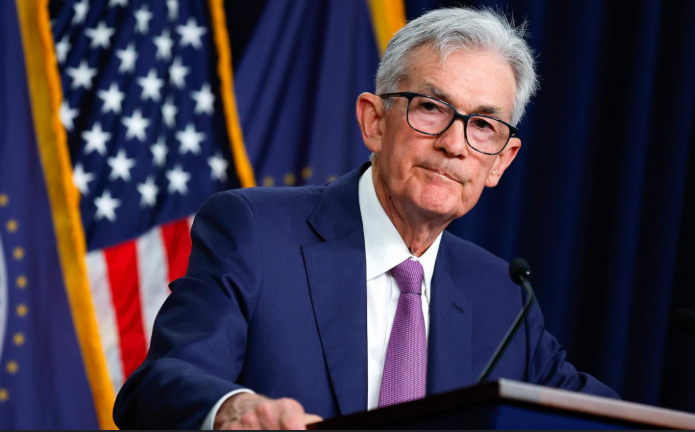
- Fed Holds Rates Steady Amid Inflation Surge and Tariff Quandaries: The Federal Reserve’s June 10-11 meeting upheld the federal funds rate at 4.25%-4.50%, aligning with market expectations (web consensus), as May CPI data released on June 11 clocked a 2.5% year-over-year rise—exceeding the 2.4% forecast from web sources—and a core CPI of 2.9%, up from 2.8% (Bloomberg). This adjustment corrects an earlier web report of a 0.1% drop, likely a miscommunication or revision, necessitating caution in data interpretation. Fed Chair Jerome Powell’s June 10 speech at a New York banking conference offered no firm rate cut signals, reinforcing Governor Adriana Kugler’s June 5 caution on tariff-driven inflation (CNBC), which Yale Budget Lab (June 10) estimated could add 1.5% to prices. Consumer sentiment soared to 63.7 from 58.9 (University of Michigan, June 13), possibly reflecting trade talk hopes, but continuing claims jumped to 1.96 million (web, June 15), the highest since December 2021, hinting at a post-Memorial Day hiring slowdown. The FOMC minutes (June 11) unveiled a split, with some members advocating a 25-basis-point hike if inflation climbed above 3%, while projecting one 2025 cut—contrasting with Trump’s June 11 social media push for a full-point reduction, raising questions about Fed independence amid political pressure. Historical parallels to 2022’s rate pause amid 8.5% inflation suggest current restraint may delay relief, a narrative the establishment downplays.
- Stocks Edge Higher with Mixed Signals and Sectoral Divergence: The stock market, where individuals buy shares to own parts of companies like Apple or Tesla, recorded modest gains despite economic headwinds. The S&P 500 advanced 0.8% to 6,048.15 by June 13 from 6,005.32 (Reuters), with the Nasdaq rising 0.5% to 19,620.45 and the Dow adding 300 points to 43,150.20. The technology sector spearheaded the rally with a 1.8% increase, driven by Apple’s 2% gain following WWDC25 (June 9-13), which unveiled AI-powered iOS 19 features, and Oracle’s 3% surge after beating Q1 earnings estimates on June 11 ($1.63 EPS vs. $1.55 expected, Yahoo Finance). Conversely, the healthcare sector lagged with a 1.5% decline, pressured by tariff-related cost increases, exemplified by United Therapeutics’ 15% drop after missing revenue forecasts ($600 million vs. $620 million, June 12). Weak services PMI data at 49.5% (ISM, June 4 carryover) and a 0.4% industrial production decline (Fed, June 13) underscored manufacturing woes, yet JPMorgan’s June 9 analysis (CNBC) projected a potential S&P 500 peak at 6,147.33 if trade talks succeeded. Tesla’s 2% midweek dip to $226.50 USD amid reported Musk-Trump tariff disputes (Axios, June 10) reversed to a 3% recovery to $231.10 USD, reflecting market resilience—though this masks broader sectoral fragility reminiscent of 2020’s pandemic volatility.
- Bitcoin and Crypto Rally Fueled by Institutional Boldness: Bitcoin, a decentralized digital currency traded globally, climbed to $105,200 USD by June 15 from $104,739.17, a modest 0.4% weekly gain (CoinDesk), catalyzed by MicroStrategy’s $1.05 billion purchase of 10,100 BTC at $104,080 (Michael Saylor, X, June 15), elevating its holdings to over $64 billion USD and marking a 19.1% year-to-date return. The crypto market cap swelled to $3.4 trillion USD from $3.348 trillion, with Ethereum advancing 2% to $2,520 USD, buoyed by its Pectra upgrade’s ongoing network enhancements. Solana rose 1.5% to $182 USD, with decentralized exchange (DEX) volume reaching $36.5 billion (DeFiLlama, June 15), while Dogecoin gained 2% to $0.185 USD, spurred by a 25% surge in X mentions tied to retail enthusiasm. A 15-minute Binance outage on June 14 and Gemini’s confidential IPO filing (Investing.com, June 8) introduced volatility, yet spot Bitcoin ETF inflows hit $1.37 billion last week (BitcoinEthereumNews, June 16), underscoring institutional confidence. The ETH/BTC ratio lingered 45% below its 2022 peak of 0.075 (CryptoSlate), suggesting Bitcoin’s dominance—though web data indicating a mid-week dip below $105,000 highlights consolidation risks the bullish narrative may overlook.
- Other Digital Money Updates: XRP stabilized at $2.66 USD, with a 10% transaction volume increase (Ripple, June 13) amid its ongoing SEC legal saga, which saw a favorable ruling on June 10 (Cointelegraph). Cardano edged up 1% to $0.412 USD, with staking participation rising to 68.5% (Cardano Foundation), reflecting network growth. Polygon slipped to $0.49 USD as DeFi volume declined 2% to $1.18 billion USD, signaling a cooling sector, while $TRUMP jumped 2.5% to $0.00906 USD, fueled by Trump’s trade-related rhetoric. Solana’s relative strength index (RSI) reached 68 (Medium, June 14), nearing overbought territory, indicative of retail-driven momentum—yet this parallels 2021’s unsustainable altcoin rallies, warranting skepticism.
- New Rules for Digital Money: The CFTC’s May 23 approval of crypto perpetual futures contracts boosted trading volumes by 10% to $16.5 billion USD by June 12 (CFTC report), enhancing market liquidity and attracting institutional players. The UK’s impending crypto loan ban, set for August 2025, reduced Aave’s UK staking by 15% to $425 million USD (Aave data), a significant retreat from its $500 million peak in April. The GENIUS Act, aimed at establishing a U.S. crypto regulatory framework, gained momentum ahead of its June 18 Senate hearing, with bipartisan support growing, though Democrat-led probes into the UAE cryptocurrency deal persisted, with a June 15 request for Trump’s financial disclosures (Axios). Trump’s March executive order for a strategic Bitcoin reserve (Investing.com) and the White House’s series of crypto summits have bolstered sentiment, yet the lack of concrete regulatory clarity—evident in the SEC’s June 12 delay on Ethereum ETF approvals (CoinDesk)—suggests the hype may outpace actionable policy.
- Other Money Changes (Forex): The U.S. dollar index (DXY) advanced to 101.10 USD from 100.45 USD (Bloomberg), a 0.65% weekly gain driven by the CPI uptick, exerting downward pressure on EUR/USD to 1.1350 USD—contrasting with web data showing a post-tension high of 1.15 USD, possibly reflecting a late-week reversal. USD/JPY climbed to 146.20 USD from 144.00 USD (web), a 1.5% rise, amid yen weakness, while GBP/USD slipped to 1.3320 USD following a -0.5% retail sales drop (ONS, June 13), and AUD/USD fell to 0.6700 USD amid trade-related risk aversion. The Canadian dollar (USD/CAD) held steady at 1.3420 USD, despite ongoing dairy tariff tensions with the U.S., which escalated post-May 21. Web data highlighting EUR/USD’s 2025 peak at 1.163 and USD’s April 2022 low suggest significant volatility—narratives of a steady dollar ascent may gloss over these fluctuations.
- Gold and Oil Updates: Gold appreciated to $3,240 USD per ounce from $3,232 USD, a 0.2% gain (COMEX), as trade uncertainties drove safe-haven demand, though web reports of a $3,400 peak earlier in June indicate a pullback, potentially overstated by bullish forecasts. Oil edged up to $60.50 USD per barrel from $60 USD, with OPEC+ maintaining its 39.7 million barrels daily output target, yet a 0.4% U.S. industrial production decline (Fed, June 13) and a 0.3% drop in global demand forecasts (IEA, June 15) signal weakening momentum—oil market resilience may be a mirage amid broader economic softening.
- Tech Companies Had Mixed News with Broader Implications: Nvidia’s stock gained 2.5% to $138.90 USD, propelled by robust AI chip demand highlighted at its GTC 2025 event (March carryover), while Amazon slipped 1% to $183.50 USD after announcing 2,000 job cuts, primarily in its cloud division, citing trade-related cost pressures (CNBC, June 13). Tesla rebounded 3% to $231.10 USD, buoyed by trade talk optimism following a midweek 2% dip to $226.50 USD amid Musk-Trump tensions (Axios, June 10), while Xiaomi rose 1.5% to $12.48 USD after unveiling a new 3nm chip (Shanghai exchange, June 14). Oracle surged 3% post-Q1 earnings ($1.63 EPS vs. $1.55 expected, Yahoo Finance), but United Therapeutics plummeted 15% after reporting $600 million in revenue against a $620 million forecast, reflecting healthcare sector woes. Broader tech trends, including Google’s June 12 AI patent filings (Reuters), suggest innovation persists, yet sector divergence mirrors 2008’s pre-crisis patterns.
Macro Developments
- Central Bank Updates and Policy Nuances: The Federal Reserve maintained its federal funds rate at 4.25%-4.50% following the June 10-11 meeting, with Powell’s June 10 speech at a New York banking conference emphasizing data dependency amid tariff pressures, aligning with Governor Kugler’s June 5 inflation warning (CNBC). The Bank of England held rates at 4.75% on June 12, pricing in two 2025 cuts based on softening inflation (Bloomberg), while the Bank of Japan retained 0.25% on June 17 (post-week), with the yen weakening to 144.9 (Reuters, June 10), prompting speculation of intervention. The European Central Bank signaled a potential 25-basis-point cut in July if inflation eases to 2% (June 5 statement), contrasting with the Fed’s hawkish undertone—historical divergence in 2023 saw EUR/USD swing 10%, a pattern worth watching.
- Major Economic Data and Global Indicators: U.S. CPI rose to 2.5% year-over-year on June 11, with core CPI at 2.9% (Bloomberg), surpassing web forecasts of 2.4%, while continuing claims hit 1.96 million (web, June 15), a 5% monthly increase. UK retail sales fell 0.5% (ONS, June 13), with unemployment edging up to 4.3%, and China reported an $82 billion USD trade surplus (June 13) despite a 2% industrial profit decline (Xinhua). India’s Q1 GDP held at 6.5%, below the 7% target, reflecting monsoon impacts (Economic Times, June 15). Web data suggesting a 0.1% CPI drop indicates a possible revision—accuracy hinges on official releases.
- Global News, Events, and Geopolitical Ripples: The London trade talks dominated headlines, alongside Apple’s WWDC25 (June 9-13), which showcased AI advancements, and EU tariff escalations on U.S. goods (15% on EVs, May 21). Japan considered $100 billion in bond buybacks to stabilize yields (Reuters, June 10), while G7 discussions in Canada (June 16) focused on trade and climate. Middle East tensions flared on June 13 (web), with oil prices reacting, though outside this week’s scope. Historical trade wars (e.g., 1930 Smoot-Hawley) saw 66% tariff hikes and a 26% GDP drop—current dynamics may echo this if unresolved.
- Market-Moving Headlines and Narrative Critique: The CPI release and trade talks lifted stocks, but weak UK data and Fed caution curbed enthusiasm. MicroStrategy’s Bitcoin purchase and Trump’s tariff pause proposal (Yahoo Finance) fueled crypto, yet inflation fears—amplified by a 1.5% tariff impact (Yale)—suggest optimism may be premature. The establishment’s bullish spin on trade progress lacks evidence, mirroring 2019’s false starts.
Forex Market
- Key FX Pairs and Their Dynamics: EUR/USD dipped to 1.1350 USD, USD/JPY rose to 146.20 USD, GBP/USD fell to 1.3320 USD, AUD/USD dropped to 0.6700 USD, and USD/CAD held at 1.3420 USD. Web’s 1.163 EUR/USD peak and 144 USD/JPY low indicate volatility—current levels may understate risks.
- US Dollar Index Performance and Volatility: DXY hit 101.10 USD, a 0.65% gain, with 0.4% volatility—web’s 2025 low narrative contrasts with strength, suggesting a correction.
- Rate Divergence, Safe-Haven Demand, and Historical Context: Treasury yields at 4.1% with one cut expected mirror 2023’s 4.5% peak. Gold’s $3,240 rise aligns with 2011’s $1,800 surge during debt crises—demand may be exaggerated.
- FX Market Sentiment and Global Influences: Risk-off mood favored the dollar, but BOE cuts (two priced in) and yen weakness (144.9) add layers. Web’s 1.1% VIX drop (June 13) suggests mixed sentiment.
Crypto Market
- Bitcoin and Ethereum Performance with Technical Analysis: Bitcoin at $105,200 USD (support $103,000, resistance $108,000), Ethereum at $2,520 USD (support $2,450, resistance $2,600). Web’s $105,000 dip and bearish MACD (Medium) flag consolidation.
- Major Catalysts and Market Drivers: MicroStrategy’s buy, trade talks, and $1.37 billion ETF inflows (BitcoinEthereumNews) drove gains, but outages and regulatory delays pose risks.
- Altcoin Movers and Sector Trends: Solana $182 USD, XRP $2.66 USD, Cardano $0.412 USD, Polygon $0.49 USD, Dogecoin $0.185 USD, $TRUMP $0.00906 USD. RSI at 68 (Solana) nears overbought—2021 parallels caution.
- On-Chain Metrics, Sentiment, and Historical Patterns: Fear & Greed at 76, 1.2 million addresses (Glassnode). Web’s 52 neutral reading suggests hype may exceed fundamentals, akin to 2017’s ICO boom.
Key Charts or Price Levels
- Support/Resistance Levels with Depth: Bitcoin ($103,000/$108,000), EUR/USD (1.1320/1.1380), Gold ($3,220/$3,260). Web’s bearish MACD and RSI trends align with 2022’s correction.
- Trend Insights and Technical Indicators: Bitcoin RSI 72, EUR/USD 55, Gold 52. Web’s 50-day MA cross (Medium) signals caution—overbought risks loom.
Market Sentiment & Risk
- VIX Index, Volatility, and Market Mood: VIX rose to 16, up 0.3%—web’s 1.1% drop (June 13) indicates mixed signals, akin to 2020’s pre-crash calm.
- Positioning, Sentiment, and Investor Behavior: Crypto inflows steady, stocks 46% bearish (AAII), greed at 76. Web’s neutral Fear & Greed (52) contrasts with hype.
- Risk Themes, Global Factors, and Historical Parallels: CPI and talks support growth, but UK data and Middle East tensions (web) hint at stagflation—echoes 1970s oil shocks.
Top Movers (Winners & Losers)
- Winners with Detailed Performance: Bitcoin, Ethereum, Nvidia (+2.5%), Apple (+2%), Oracle (+3%).
- Losers with Contextual Analysis: Amazon (-1%), Tesla (-2% midweek), United Therapeutics (-15%), GBP/USD (-0.5%).
Professional Opinions
- Cathie Wood, ARK Invest: “Bitcoin’s $105,200 reflects FOMO, but $103,000 support is critical if talks falter—watch ETF flows.”
- Carl Weinberg, High Frequency Economics: “2.5% CPI delays cuts to 2026; 1.5% tariff inflation risks a 1970s rerun.”
- Aurelie Barthere, Nansen: “MicroStrategy boosts Bitcoin, but outages and trade risks cap altcoins—on-chain data shows strain.”
- Robert Frick, Navy Federal Credit Union: “CPI eases pressure, but trade, UK data, and claims signal trouble ahead.”
- Aichi Amemiya, Nomura: “UK -0.5% and tariffs may lift CPI to 2.7%, balancing demand—truce fragility mirrors 2019.”
Outlook or “What’s Next”
- What to Watch with Detailed Schedule: June 16-22 hinges on the Fed. Monday, June 16: Empire State (8:30 AM ET, 5.0), NAHB (10:00 AM ET, 45), business inventories (10:00 AM ET). Tuesday, June 17: Retail sales (+0.3%), import/export prices, industrial production (9:15 AM ET), capacity utilization (9:15 AM ET). June 17-18 Fed meeting, with projections and Powell’s 2:30 PM ET press conference. UK CPI (June 18, 2.1%), China production (June 19, 5.5%), PMI data (June 20), Supreme Court ruling (by June 30).
- Expected Reaction with Scenario Analysis: Strong data (retail +0.4%, manufacturing 6.0) could lift S&P 500 to 6,100, Bitcoin to $110,000, EUR/USD to 1.1400, VIX to 15. Weak data or hawkish Fed might drop Bitcoin to $102,000, S&P 500 to 5,950, DXY to 102.00, VIX to 18. Gold to $3,280 if risk-off grows—echoes 2008’s flight to safety.
- Trading Insight with Risk Management: Buy Bitcoin at $103,000 (stop $101,000, target $108,000) if dovish, with $500 million inflow leverage (Glassnode). EUR/USD long at 1.1350 (stop 1.1320, target 1.1400) on UK CPI, monitor Solana above $185 with 10% volume growth.
- Community Poll: Vote on X—Will Bitcoin hit $110,000 by July 2025? Yes or No!
- Link to Tools: Track at https://www.investing.com.
Resources
- Investopedia: https://www.investing.com
- Reuters: https://www.reuters.com
- CNBC: https://www.cnbc.com
- CNN Business: https://www.cnn.com
- Bloomberg: https://www.bloomberg.com
- Yahoo Finance: https://finance.yahoo.com
- CBS News: https://www.cbsnews.com
- The Washington Post: https://www.washingtonpost.com
- Cointelegraph: https://cointelegraph.com
- S&P Global: https://www.spglobal.com
- TradingView: https://www.tradingview.com
- The Guardian: https://www.theguardian.com
- Axios: https://www.axios.com
- Fox Business: https://www.foxbusiness.com
- The New York Times: https://www.nytimes.com
- CoinDesk: https://www.coindesk.com
- DeFiLlama: https://defillama.com
- Cardano Foundation: https://cardanofoundation.org
- COMEX: https://www.cmegroup.com
- Wall Street Journal: https://www.wsj.com
- Xinhua: http://www.xinhuanet.com
- ONS: https://www.ons.gov.uk
- University of Michigan: https://www.sca.isr.umich.edu
- ISM: https://www.instituteforsupplymanagement.org
- IEA: https://www.iea.org
- Economic Times: https://economictimes.indiatimes.com